


Mastering Option Trading: Unlocking Profits with the Short Straddle and Straddle With A Twist Strategy
In today's post I will discuss a unique options trading strategy which can be employed during a high volatile market. We will learn here how to minimize the risk and maximize the return.
Position Structure Of Short Straddle & Straddle With A Twist.
Short ATM Call and Put options of same underlying and expiry.
Long same distance ITM call and put of the same underlying and expiry.
Lower side Breakeven Point = ITM call Options Strike Price + (Net Premium Paid - Strike Distance Between ATM & ITM)
Upper side Breakeven Point = ITM put Options Strike Price - (Net Premium Paid - Strike Distance Between ATM & ITM)
Maximum Profit = (Premium Received For Short Straddle - Time Value Paid for ITM call and put option)
Maximum Rik = Premium Paid - Strike difference between ITM & ATM options
This strategy is a combination of Short Straddle and a Straddle With A Twist. Let us discuss steps By steps.
What is a Short Straddle?
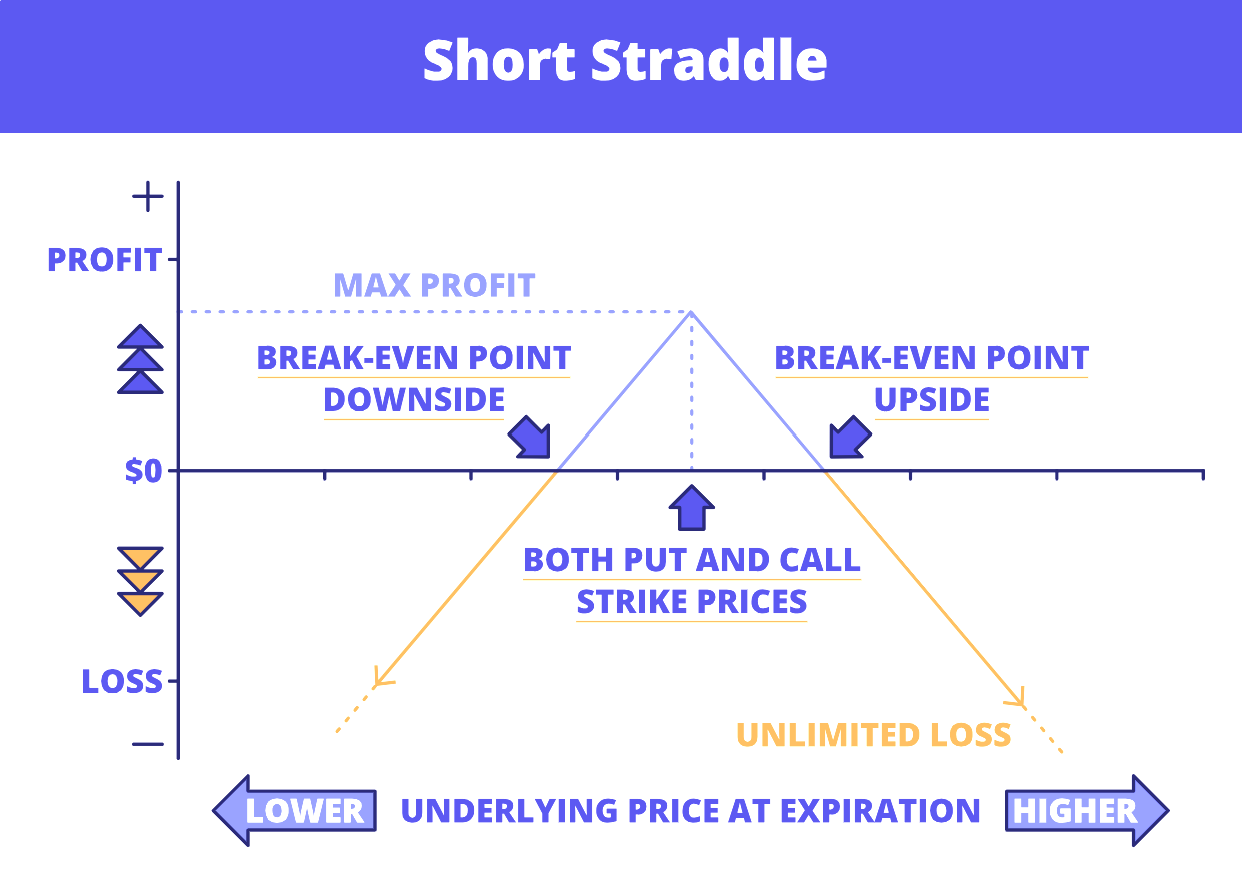
A short straddle is an options trading strategy that involves selling (writing) both a call option and a put option with the same strike price (Normally ATM) and expiration date on the same underlying asset.
Position Structure
Short Call Option: We are selliing a call option, giving the buyer the right to purchase the underlying asset at the strike price.
Short Put Option: We are selling a put option, giving the buyer the right to sell the underlying asset at the strike price.
Ideal Market Outlook For The Strategy
We are expecting low volatility in the underlying asset.
This strategy will give us profits when the underlying asset’s price remains close to the strike price, in that case, both the options will expire worthless or be less costly to buy back.
Short Straddle Profit Potential
Maximum profit is possible if the underlying closes at the strike price we sold, in that case, the premium we have received, will be the maximum profit for us.
Measuring The Risk for Short Straddle
Theoritically the potential losses could be unlimited, if the underlying price significantly moves away from the strike price in either way.
Breakeven Points of Short Straddle
Upper Side Breakeven Point: Strike Price + Total Premium Received
Lower Side Breakeven Point: Strike Price - Total Premium Received
Example of Short Straddle
Assume Nifty trading at 22900 and we feel market will be side ways from here until expiry, so we decide to go for a short straddle strategy.
So, we will short both 22900CE & 22900PE at the rate of 120 and 116 recpectively.
Here is the calculation below...
Shorted 22900CE @ 120
Shorted 22900PE @ 116
------------------------------------------
Net premium received= 236
------------------------------------------
If Nifty moves up significantly then call short will give us loss where put short will give us profit; where Nifty put short will give us loss and call short will give us profit if Nifty fall significantly.
Upper side Breakeven = Strike Price + Premium received
= 22900 + 236
= 23136
Lower side Breakeven = Strike Price - Premium received
= 22900 - 236
= 22664
It means we wont lose money if Nifty close anywhere between 22664 to 23136
Maximum gain is possible when Nifty will close at 22900.
What Is A Straddle With A Twist
Straddle is buying call and put of the same underlying, same strike price and same expiry, where Straddle With A Twist reffers is buying Call and put with difference strike price but ITM, buying OTM call and put is called Strangle.
For an example if Nifty current market price is 23000 then we can buy ITM call and put of same distance, it will be called Straddle With A Twist.
Like 22900CE + 23100PE or 22800CE + 23200 PE, see the differences are same from ATM.
The normal Breakeven for a Straddle With A Twist are ..
Lower Side Breakeven = ITM call Option Strike Price + Net Premium Paid
Upper Side Breakeven = ITM put Option Strike Price - Net Premium Paid
Maximum profit theoritically unlimited where maximum loss for only Straddle With A Twist is the net premium paid.
Combining Short Straddle & Straddle With A Twist
Shart Straddle Risk Is Unlimitted & profit potential is limited where Straddle With A Twist has a limited risk with Unlimited profit. So if we combine both strategy then We can limit our risk as well as we can generate greater reward than our risk.
When to combine both strategy?
When we expect a zigjag market scenario or highly volatile market till the expiry we combine both the strategy to generate income from volatile market.
Example
Assume Nifty is trading at 23000
we will sell both 23000CE & 23000PE and assume our analysis saying the maximum downside for Nifty is around 22700 where maximum upside potential around 23300 (Remember the number are nearest round figure)
So we will buy Nifty 22700CE & 23300PE
Here The Strike Difference =300
Calculation
Short 23000CE @ 160 Long 22700CE @ 340 Time Value Paid = 40
Short 23000PE @ 154 Long 23300PE @ 333 Time Value Paid = 33
----------------------------------------------------------------------------------------------------------------------------------------------------
Premium Received= 314/- Premium Paid =673/- Total TV = 73
----------------------------------------------------------------------------------------------------------------------------------------------------
Net Premium Paid = 673 - 314
= 359
Maximum Loss = Premium Paid - Strike Diffeerence Between ITM and ATM
= 359 - 300
= 59
Maximum Profit = Premium Received For Short Straddle - Time Value Paid For Straddle With A Twist
= 314 - 73
= 241
Upper side Breakeven Point = ITM put Options Strike Price - (Net Premium Paid - Strike Distance Between ATM & ITM)
= 23300 - (359-300)
= 23300 - 59
= 23241
Lower side Breakeven Point = ITM call Options Strike Price + (Net Premium Paid - Strike Distance Between ATM & ITM)
= 22700 + (359-300)
=22700 + 59
=22759
It means we will be safe is Nifty close anywhere between 22759 and 23241, but our risk is limited, we cant lose more than 59 point even after significant up or down move.